
Construction’s Technology Renaissance
Ubiquitous sensors, platforms, computer vision and abundant capital will usher in a new era of construction productivity


A four-legged robot struts across a concrete floor scanning the environment. As it traverses the ground, stepping over conduit and avoiding physical obstacles, it maps out a 3D, to-scale, digital representation of the real world.
On the construction site, we’re not far off from the technology behind Black Mirror’s metal head - the killer quadruped that hunts humans (LINK). Thankfully, it’s more docile cousin, Spot, made by Boston Dynamics (LINK), is more interested in quality control.

Fully autonomous sensor-mounted robots are here, and they represent a paradigm shift in the industry.
A New World Order
Construction is changing dramatically. Without exaggeration, we are entering a period of change in Construction similar to the adoption of computers in engineering and design. It promises to radically increase productivity, reduce costs and change the way things are built.
We are going to explore four real world examples of the forces and technologies that are going to usher in a new era of productivity in construction: the proliferation of sensors, the mass adoption of platforms, the acceleration of computer vision, and record venture capital investment. [Note that there are many other forces that are changing the industry, but they’re out of the scope of this article. For other concrete examples, start-ups and ideas, subscribe to this free newsletter].

First, it’s worth exploring by what indicator we are measuring change: productivity. Most academic papers use the growth in incremental value add of labour as a proxy for productivity (in other words, the change in dollars added per hour worked). The problem with this measure though is that there’s no good way to measure it.
The Problem with Productivity
The jury is out on how productive or unproductive the construction industry is. In 2017, McKinsey, a management consulting firm, published a report that examined the global industry’s $1.63 trillion (USD) dollar productivity gap compared to the global economy. It concludes that lack of technological adoption, diverse geographic regulatory hurdles and mismatched contractual incentives create structural issues that lead to relative productivity loss (LINK). They’re not wrong, but the underlying data is misleading. Other bodies conclude that certain verticals in the construction industry are actually becoming more productive, albeit slower than the global economy, but there aren’t accurate enough deflators to know for sure (LINK).
One issue is how the measure of productivity is calculated. Manufacturing is excluded, which removes prefabricated building components from the calculation, artificially skewing productivity lower.
Another is the quality of the data. There are no concrete ways to measure all the inputs into construction, which are labour, capital and materials (LINK). Measuring labour to determine productivity across the industry is like using the temperature of the oven to measure if your turkey is done cooking, without cooking time or the size of the turkey.
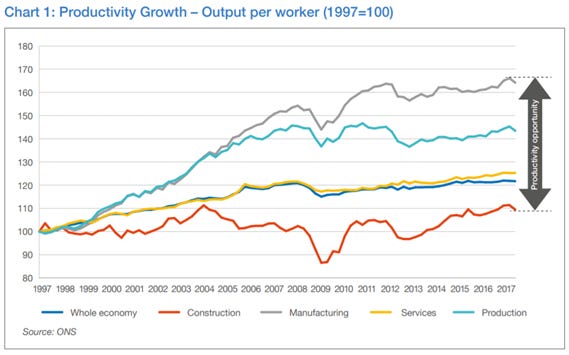
Which is how we end up with this statement: “Construction productivity has been flat for decades, according to McKinsey research. In manufacturing, by contrast, productivity has nearly doubled over the same period, and continuous improvement has been the norm (Exhibit 3).”
Source: McKinsey & Company
This doesn’t make logical sense. Of course the construction industry is more productive than it was 25 years ago. Regardless of the numbers, we live in a world where a 57-storey skyscraper can be erected in 19 days (LINK), thanks to logistical software, prefabricated materials, and modular design. McKinsey primarily uses labour productivity, but they claim that the industry as a whole is unproductive even though there are other factors to consider (capital and material efficiency). So, how does the data and reality reconcile?
The problem is that all of these studies use top-down deflators to estimate productivity, which are fraught with error. For example, the central data on production come from the Census of Construction, which is conducted only once every five years. There is a lot of uncertainty regarding undocumented immigrant working hours (particularly in the United States), allocation of productivity to manufacturing instead of construction, etc. Other issues with current deflators are linked here (LINK, page 154 “Measurement Challenges”) and here (LINK).
While the data does not represent the industry as a whole, it does fall behind others in other key measures. Return on invested capital (ROIC) and investment in information technology lags behind other industries (LINK). My theory is that contractors are hesitant to invest in productivity software and technology because it is difficult to measure the ROI, which also affects the magnitude of their IT investment. I’m also not suggesting that the industry doesn’t have its unique challenges (it does: site variability, contracts that allocate risk inappropriately, supply chain issues, etc.), but the labour productivity issue (i.e. that labour productivity is decreasing), and its appropriateness as a proxy for the industry’s productivity raises a question: how should inputs and outputs be measured on site? This brings us to the first force that is modernizing the industry: sensors.
Sensors, the First Force
If you can’t measure something, how do you improve it?
McKinsey compares construction to manufacturing in their 2015 blog post: The construction productivity imperative (LINK). They are essentially asking why manufacturing labour productivity has increased relative to lagging construction labour productivity. The answer is that even though they are comparable (both manufacture products using labour and physical materials), the environments are completely different.
Manufacturing is a controlled, centralized environment, where measurement infrastructure (think sensors, cameras and computers) monitor the transition from inputs into outputs. For example, Amazon warehouses use a sophisticated system of cameras and sensors to track productivity across all workers (LINK). The modern construction site is like a mobile, self-building manufacturing plant that has to relocate and rebuild for each project. The cost to install this measurement infrastructure has a high fixed cost, so it’s hard to justify installing it every time on a construction site, especially when the results are unproven, and margins are thin. The result is that there are less ways to measure inputs and outputs on a fluid construction site compared to a static manufacturing facility.
The output measurement problem was an issue in the advertising industry in the past. Advertisement was one-directional (i.e. the advertiser could reach the viewer but not vice versa), which made efficacy hard to measure. Then Google and Facebook measured everything people were doing, used the results to provide relevant ads based on user demographics, analyze their efficacy in real time, and disrupted an industry.
There are ways to measure outputs on construction sites, but they too have challenges. Earned Value is used to represent the amount of work that has been completed. If a project is 50% done and it costs $100M, then the earned value is $50M.
But how is that percentage determined? It’s based on a few things, billings, percentage of work completed, etc., but in both cases, it relies on manual survey and entry. A subcontractor needs to attest to how much value has been earned, and a contractor needs to interpret what percentage of the project has been completed.
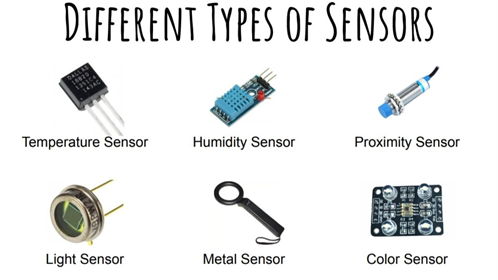
For one, billing is a lagging indicator. Depending on how things are billed, it could take two weeks or more to show the amount completed. As an analogy to advertisement, imagine if it took you two weeks to see if your ad on Facebook had a low or high click rate. It increases your iteration time and makes it harder to react to change. Secondly, billing is prone to user error and are hard to verify. How is a contractor supposed to know if the subcontractor actually accumulated 300 person hours on site or 280? This is where sensors come in. By sensors I mean technology that can autonomously obtain various types of data. Think temperature sensors, occupancy sensors, pressure sensors, etc. Shown below.
Imagine the potential of ubiquitous sensor technology on site: measuring the amount of people on site, the amount of time they’re there, the path that they take to and from various destinations, the amount of noise, the amount of physical work completed, etc. Measuring would turn construction sites into a computer that can be troubleshot, programmed, assessed and reprogrammed in real time. Ubiquitous sensors would do to construction what Facebook and Google did to advertising.
There is some technology doing this now. Companies like Site Check In (LINK) are using QR codes to obtain attendance data on workers in California and eliminating manual data entry. This makes it far easier to analyze data generally and will help construction companies create actionable insights that will improve productivity.
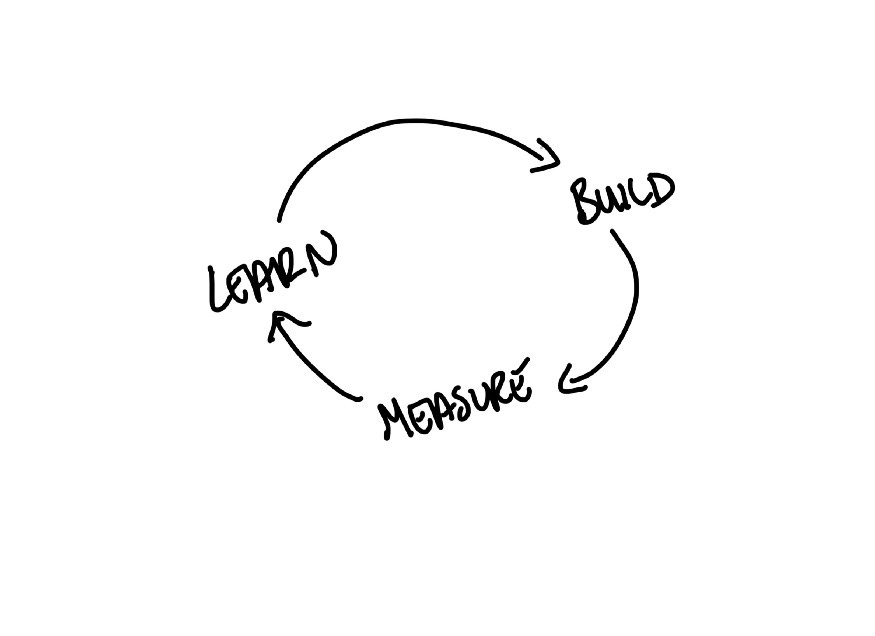
It’s worth a theoretical explanation of how sensors will help. Generally, productivity growth stems from technology and technology itself stems from doing things a different way, measuring the results, keeping what works and discarding what doesn’t. This loop of trying things differently, measuring the results, and iterating is called the Build-Measure-Learn feedback loop, but really it’s just the scientific method.
There is currently no fast and reliable way to measure and therefore learn on site, which makes it hard to justify an investment in productivity software or other technologies that can improve field operations. Using the iPhone as an example, it would be harder for a runner to measure their improvement without its GPS tracker and accelerometer.
Sensors and ubiquitous measurement will change this. They will help measure what contractors deem important on site (for example, the amount of installed piping) and will help with decision making, backed up by evidence. Constructors will be able to know which subcontractor is most efficient, if workers have to walk too far to between destinations, or if there are barriers preventing high efficiency labour, automatically. It will help enable data driven decision making across all sectors of construction, not only on large mega-projects.
As things become easier to measure, the efficacy of tools will become easier to determine, and will lead to learning that will make future workflows easier — closing the loop on the Build-Measure-Learn loop and increasing productivity.
In order for this to be feasible for companies however, there needs to be a fast network with a lot of coverage and a application ecosystem that makes this data useful. For the former, 5G is continuing to roll out across North America.
For the latter, enter Platforms, our second force for change.
Platforms, the Second Force
You wouldn’t have the App Store without the iPhone.
Similarly, there will not be a flourishing ecosystem of third-party construction applications using sensors without a handful of good platforms.
By platforms I mean applications that integrate easily with third-party applications. Think of the iPhone as a platform that other developers can use to sell their products (through the App Store).
Platforms solve two large problems for third party applications: distribution and security.
Distribution is famously hard in construction. The iteration cycle is long (usually the length of the project). Each project is treated like its own miniature company. The number of decision makers that will choose to implement a solution is low, which makes them harder to be reached, and increases the cost of sales. For security, once a construction company trusts a platform with their data, they should, by extension, trust a third-party application that has agreed to play by the platform’s rules.
Big platform adoption will help this. They need to be big because the fixed cost of integrating third-party applications takes significant investment. The bigger they get, the better the marketplace should be, since their size and success will become self reinforcing.
Just as we’re seeing the scale and benefits of integrations with consumer technology (apps that run on the iPhone, things that work with Google) so too will third party applications for construction.
If you’re still not convinced, imagine how the mobile phone application economy would look without the emergence of the app stores.
This will be a boon to construction companies. As sensors proliferate, the applications that will use their data to improve workflows and efficiency will too. And as platforms make it easier for those applications to flourish, so too will construction. A positive feedback loop.
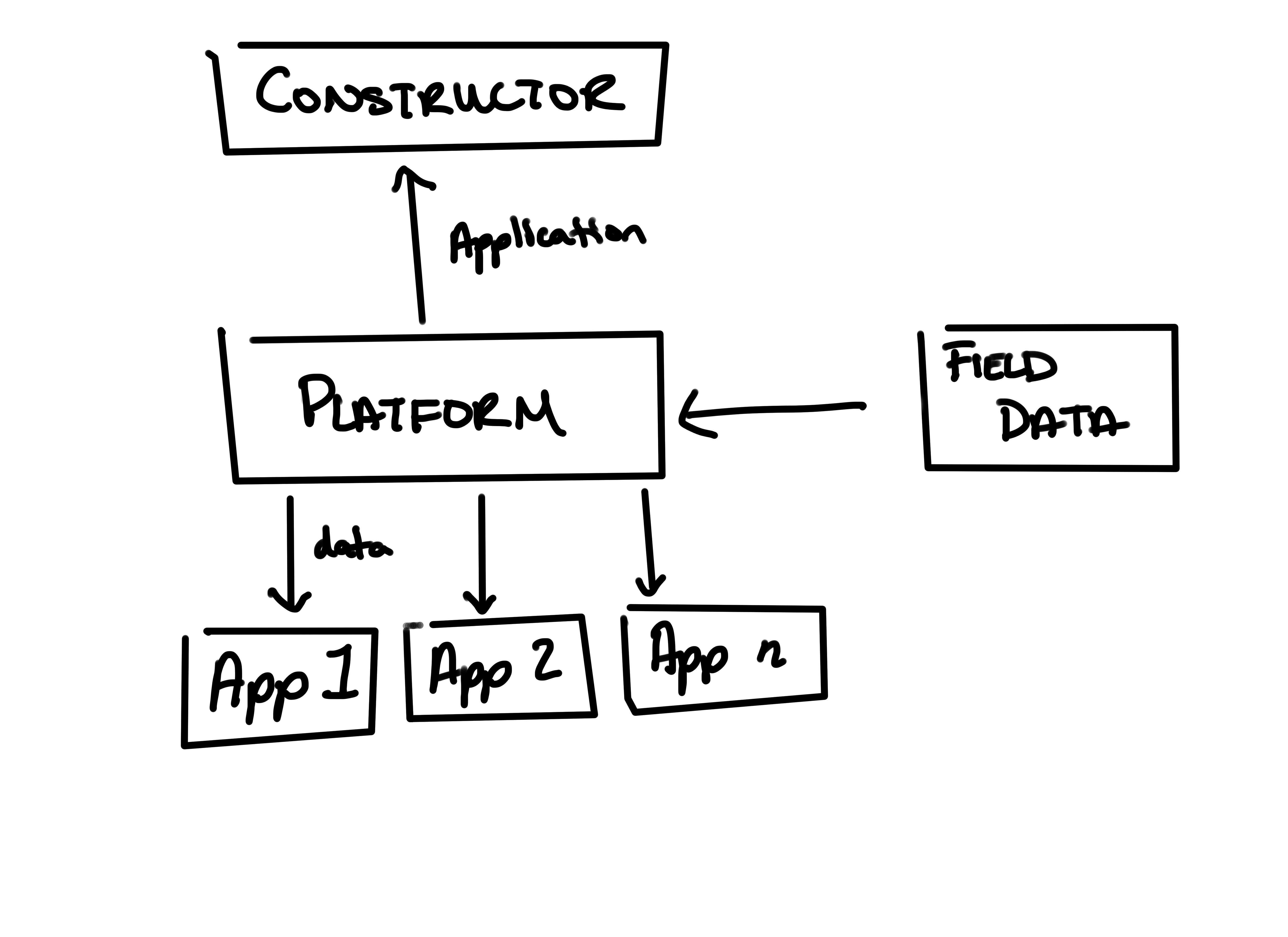
The good news is that this is already happening. Platforms like Procore, Willow and Aconex gained a lot of traction due to COVID-19 and the resultant need for digitization. However, there are a lot of unserved companies that still need solutions. Smaller residential and commercial constructors overwhelmingly choose not to use software platforms to assist them. As demographics change, so too will their propensity for tech adoption. So the trend is positive, but there is still a long way to go.
How will this help? Beyond the ways described above it will be substantially easier to improve workflows, because it will be easier for developers to 1) build, 2) distribute, 3) implement, and 4) verify efficacy. This will make companies more keen on investing, leaner, more cost efficient, and more competitive on bids, thereby encouraging mass adoption on an industrial scale.
Imagine quickly downloading a freemium version of an app off the Procore marketplace that allows you to use data from sensors to estimate the amount of time each sub trade spent on site. We don’t have this yet, but when it comes it will be disruptive.
Procure just raised $630M from an IPO in May of 2021. Investors are clearly bullish on construction technology and are pouring money in construction start-ups across the value chain (LINK). Which leads us to our third force for change, Venture Capital.
I’ll be covering this in Part 2 of this newsletter.
Built is a free weekly newsletter covering innovating construction start-ups, technology and innovations. Subscribe here to get a copy of Built weekly directly in your inbox. Don’t worry, we don’t spam.
When will my SF home have air conditioning?